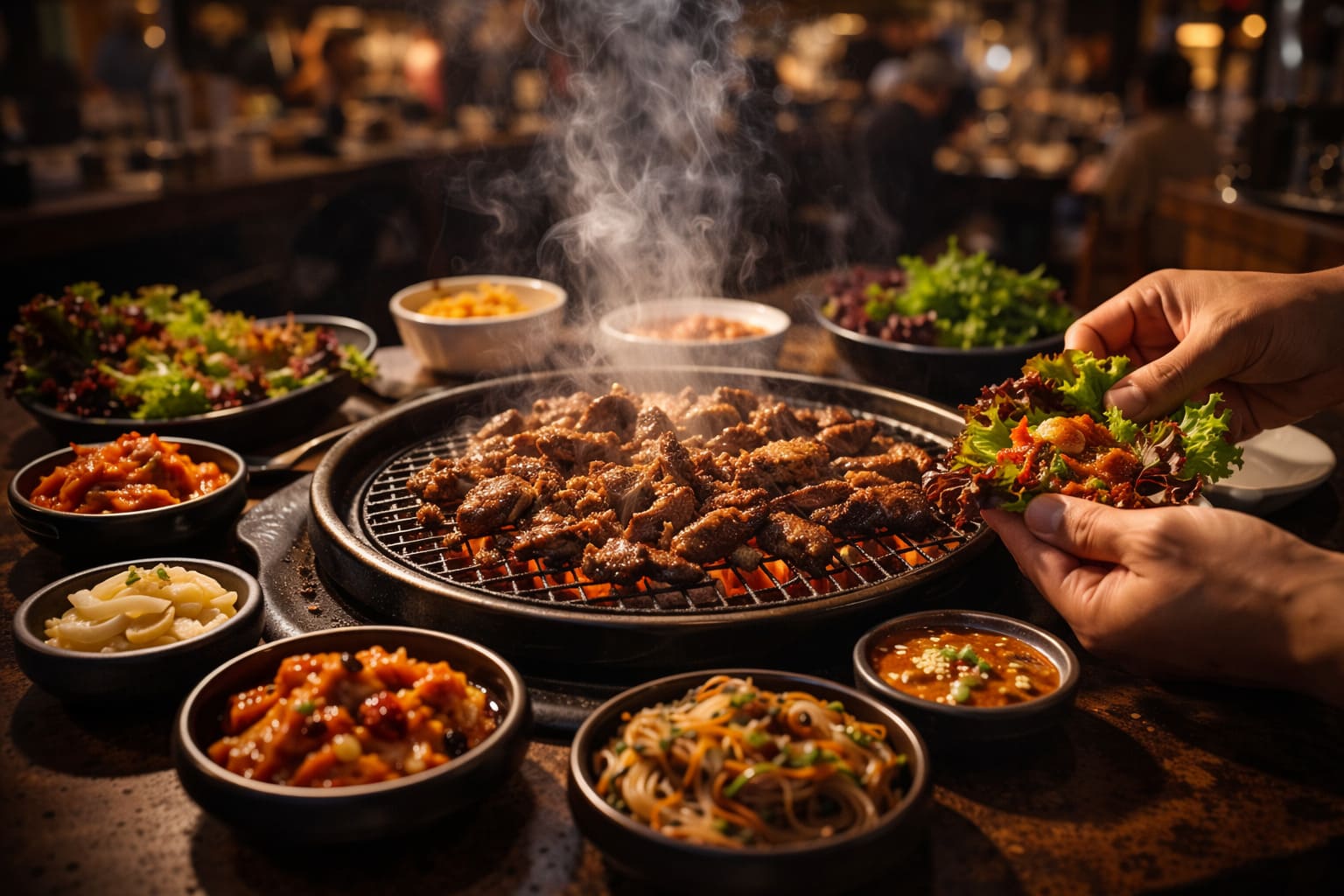
Korean food went global through two forces that met in the same decade: a South Korean government campaign launched in 2009 to put Korean cooking on the world map, and a wave of Korean television, music and film that made people abroad curious about everything Korean, including dinner. Neither force alone explains it, and the campaign's own results are more mixed than its reputation suggests.
What did Korea actually plan in 2009?
In 2009 the government of President Lee Myung-bak launched a campaign called "Korean Cuisine to the World", also known as Global Hansik. Hansik is the Korean word for Korean food. Reported budgets differ by source: one account of the campaign gives about $77 million, another about $40 million, so treat any single figure with care.
The motive was reputation as much as appetite. According to a 2024 account in The Hustle, South Korea ranked 33rd of 50 countries on the Anholt-GfK Roper Nation Brands Index in the late 2000s, and Lee, a former construction-company chief executive, wanted to reach 15th by 2013. The stated food targets were specific: raise the number of Korean restaurants abroad from about 10,000 in 2007 to 40,000 by 2017, open 100 top-tier Korean restaurants around the world, and more than double agricultural and seafood exports. Another account adds the aim of putting Korean cuisine among the five most popular in the world. First Lady Kim Yoon-ok spoke at a 2009 "Korean Cuisine to the World" symposium and became the campaign's public face.
Kimchi, Codex and a bus
The projects were a mixed bag. In 2009 South Korea registered gochujang (red pepper paste), doenjang (soybean paste) and ginseng with the Codex Alimentarius Commission, the international food-standards body. The same year it created the World Institute of Kimchi, with a stated mission of establishing Korea as the mother country of kimchi.
The campaign also paid for stunts. The Bibimbap Backpackers, five people in their twenties sponsored by the government and the company CJ Foodville, traveled to 15 countries over 255 days in 2011 to cook and talk about Korean food. A Kimchi Bus visited 34 countries. In the United States the government backed Korean-Mexican fusion food, starting in Los Angeles.
Kimchi gained a formal honor in 2013, when kimjang, the communal making and sharing of winter kimchi, was added to UNESCO's Intangible Cultural Heritage list. North Korea's own kimchi-making tradition followed in 2015.
A drama about palace cooks arrived first
Government money did not create the audience. The Korean Wave, or Hallyu, was already running. The first known use of the Chinese term for it, "Korean Wave", appeared in the Beijing Youth Daily on 19 November 1999, describing Chinese enthusiasm for Korean dramas and pop songs. That followed the 1997 financial crisis, after which Seoul began treating culture as an export industry and passed a Basic Law for Promoting Cultural Industries in 1999.
The most food-minded hit was Jewel in the Palace (Dae Jang Geum), which aired on MBC from 15 September 2003 to 23 March 2004. It follows a woman in the royal kitchens, and royal court cuisine is one of its main themes. It averaged a 45.8 percent rating in South Korea, was sold to 91 countries according to one tally, and is credited with rekindling interest in traditional Korean cooking at home and abroad. Its final episode in May 2005 was the highest-rated TV episode in Hong Kong history. Korean snacks and instant noodles also spread partly through appearances in dramas.
Later came K-pop, with BTS at the head of what is sometimes called Hallyu 2.0, the Oscar for Parasite in 2019, and Netflix's Squid Game from 2021. Mukbang, the practice of eating on camera, became a social media genre. The Hustle quotes the gastrodiplomacy researcher Paul Rockower on why the combination worked: food, music and film together made people more interested in all three. The Hustle also notes that none of these cultural trends can be traced directly back to the campaign.
Korean fried chicken needed no campaign
Some of the best-known exports owe little to Seoul's planners. Fried chicken had old roots in Korea, but the modern version took shape in the 1970s as cooking oil became widely available. Lims Chicken, described as the first modern Korean fried chicken franchise, opened in Seoul in 1977. In 1982 Yun Jonggye in Daegu created the sweet and spicy yangnyeom style by marinating the chicken to soften its hard crust. Kentucky Fried Chicken opened in South Korea in 1984, and after the 1997 financial crisis laid-off workers opened chicken restaurants in large numbers, crowding the home market.
That crowding is one reason chains such as Kyochon and Pelicana went abroad, to the United States, China, Canada and Southeast Asia. One recent count puts Korean brands at about 1,800 stores in 60 countries.
Los Angeles supplied another route. Chef Roy Choi's Kogi truck, which began selling kimchi-topped Korean tacos in 2008, announced its locations on Twitter and drew lines of 300 to 800 people, according to The Hustle. That was a year before the campaign began.
How old is the kimchi the world fell for?
The kimchi on supermarket shelves is both ancient and recent. Fermented vegetables appear in early Korean records, and radish kimchi is attested in a 13th-century poem from the Goryeo period. A late 15th-century account describes households burying kimchi jars in the ground to last the winter.
The red color is newer. Chili peppers reached Korea from the Americas around the early 17th century, with a first mention in the 1614 encyclopedia Jibong yuseol, and became common in kimchi only in the 19th century. Kimchi has also had trade quarrels. In 1996 Korea objected to Japanese kimuchi, which was unfermented and closer to asazuke, and in 2001 the Codex Alimentarius published a voluntary kimchi standard. The story of fermented foods like it runs through the history of fermentation.
Did Korean food go global as planned?
By some measures, yes. Kimchi exports hit a record $159.9 million in 2021, according to The Hustle. CJ's parent company sold $508 million of Bibigo dumplings worldwide in 2020, $318.5 million of it in the United States, and H Mart, the Korean-American supermarket chain, had about 100 US stores. Dumplings have their own long trail, told in the history of dumplings, and Korean grocers are one chapter of how immigration changed American food.
By others, the picture is less tidy. In 2024 South Korea stood 23rd on the nation brands index, short of its target of 15th. A 2018 poll by the Korean Food Promotion Institute found about 88 percent of US residents satisfied with Korean food but only about 63 percent aware of it. Thailand's earlier Global Thai program, launched in 2002, had lifted its restaurant count from about 5,500 to more than 10,000 by 2011. In 2024 the Korean institute was still calling for a clearer brand image for Korean cuisine, with a strategy due by the end of that year.
Questions people ask
When did South Korea start promoting its food overseas?
South Korea launched its "Korean Cuisine to the World" campaign in 2009 under President Lee Myung-bak. It aimed to raise the number of Korean restaurants abroad to 40,000 by 2017, open 100 top-tier Korean restaurants, and make Korean cuisine one of the five most popular in the world.
What does Hallyu have to do with Korean food?
Hallyu, the Korean Wave, is the spread of Korean dramas, pop music and film abroad. The term first appeared in a Beijing newspaper in 1999. Dramas such as Jewel in the Palace, set partly in the royal kitchens, drew viewers to Korean cooking, and snacks and instant noodles spread through appearances on screen.
When did kimjang get UNESCO recognition?
UNESCO added kimjang, the communal making and sharing of winter kimchi in South Korea, to its Intangible Cultural Heritage list in 2013. North Korea's own kimchi-making tradition was added in 2015. The listing honors the practice of making and sharing kimchi, not a single recipe.
When did chili peppers reach Korean kimchi?
Chili peppers came to Korea from the Americas around the early 17th century, and the 1614 encyclopedia Jibong yuseol mentions them first. They became common in kimchi only in the 19th century, so the red kimchi most people know today is a relatively recent form of a much older dish.
Filed under Migration Stories
Want more stories like this?
One food history story, every week. No spam, just the stories behind what the world eats.