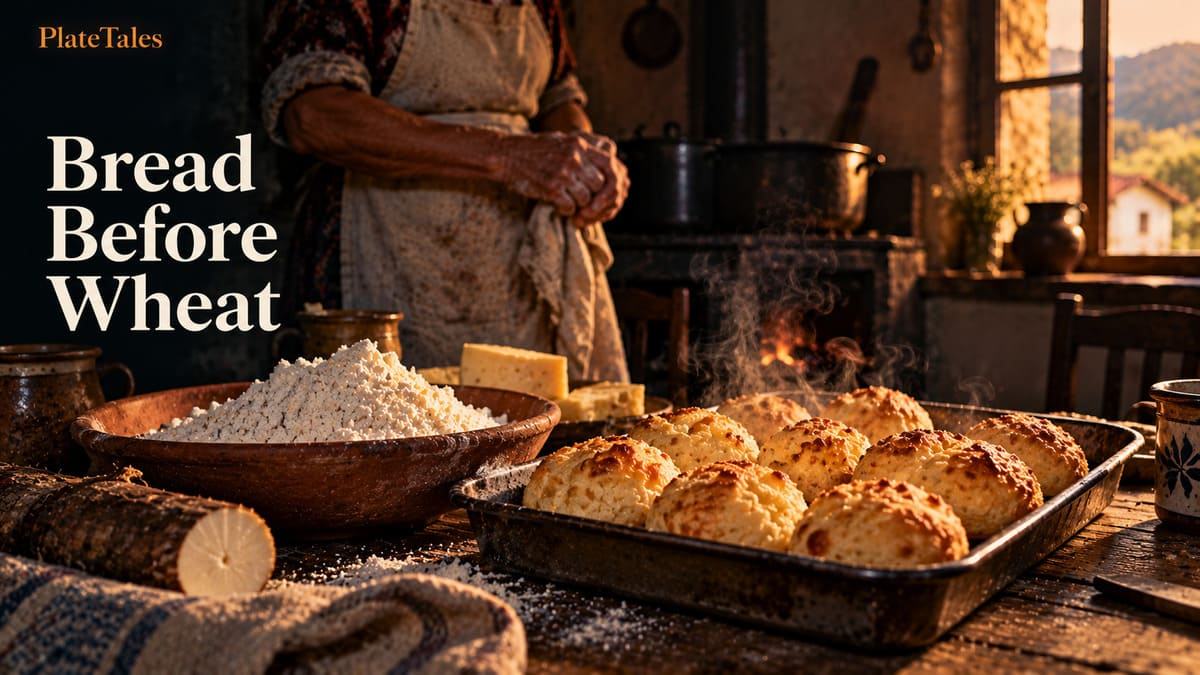
Pao de queijo, the chewy Brazilian cheese bread, comes from the state of Minas Gerais, and the usual date given for it is around 1750. Nobody can name the cook, the town or the year. What the sources agree on is the pairing: cassava starch from Indigenous farming, and cheese from the dairy farms of the interior. How and when the two met is where the stories split.
Pao de queijo history: what the sources agree on
There is consensus that the bread is from Minas Gerais and that it dates to about 1750, but there is no record of the exact place or date of its creation. A 2024 piece in the history magazine Aventuras na Historia says the same thing from another side: no studies pin down where in the state the recipe was developed, yet it is certain that the starch-and-cheese combination started there. The Michelin Guide Brazil, in a 2023 article, is blunter: "nao se sabe ao certo" where it came from, and the 1750 date is something people believe.
No dated recipe, diary or inventory is cited for it. The 1750 figure traces back to Luis da Camara Cascudo's 1983 history of Brazilian eating, not to a document that says "pao de queijo" in the eighteenth century. Treat it as an informed estimate.
Cassava starch came first, and it was Indigenous work
The base of the bread is polvilho, cassava starch. Cassava was probably first domesticated in west-central Brazil, no more than about 10,000 years ago. The bitter kind is poisonous raw, so peoples across the Americas developed ways to grate it, press the mash in a woven tube to squeeze out the liquid, and dry and sift what was left. Starch settles out of that liquid and can be collected for cooking.
That knowledge was not invented by the people who later wrote Minas Gerais's recipes down. The Michelin article says cassava was readily available "thanks to Indigenous culture", and a Brazilian wheat shortage did the rest. In its telling, large-scale wheat farming only arrived in Brazil in the twentieth century, and good wheat flour was scarce far from the coast. The same point about the interior turns up elsewhere without a source, so it stays a plausible explanation and not a proven one.
Gold, enslaved cooks and the story people repeat
A 2014 newspaper piece in Estadao and the American company Chebe place the story around 1700, when gold discoveries near Ouro Preto pulled people into the southeast, among them large numbers of enslaved Africans. With no wheat, they say, cooks made bread from cassava starch, learning about the tubers from the Tupiniquim.
This is the version that turns up in blog posts as a tale of enslaved women who made bread from starch left over from processing cassava. It is plausible in outline. Enslaved people did much of the cooking on Brazilian farms, and cassava starch was in every kitchen. But no named cook, no estate record and no recipe from the period turns up. The most careful accounts do not mention enslaved cooks at all. The honest summary is that the starch side of the story is solid, the cooks who made it are unrecorded, and the claim that this was specifically a slave-kitchen invention is repeated more than it is documented.
When did the cheese go in?
Here the sources disagree outright. Chebe and Estadao say grated hard cheese was added in the late nineteenth century. The rival version is older. Aventuras na Historia says the earliest versions used cheese scraps called grosa, the trimmings left when a wheel of cheese is shaped, mixed with polvilho. In that account the cheese came as soon as Minas farms were making dairy products, which it connects to the mid-eighteenth century.
For a reader of food history that is a real gap, and the accounts do not settle it. The later date fits a story in which cheese arrived once Minas had become a major dairy region. The earlier one fits the thrifty-kitchen logic of using up trimmings. If you want to read more about how cheese itself developed as a food, see the history of cheese.
A quick bread for visitors
One detail with a named source: the Senac gastronomy researcher Vani Pedrosa, quoted by G1 and repeated by Aventuras na Historia, calls it a "pao de minuto", a bread made fast for visitors while the host kept talking, and served warm with coffee. She describes starch plus surplus cheese as "um encontro perfeito". Michelin adds that people suppose it was made for weekends, guests and special occasions.
So the earliest pao de queijo, if these accounts are right, was hospitality food and not a bakery product. It did not need yeast or wheat. For another Brazilian dish whose popular origin story has been questioned, read about feijoada, and for the wider story of what people bake when wheat is not available, the history of bread.
A cousin to the south?
A less common theory ties the bread to chipa, the cheese roll of Paraguay and northeastern Argentina. The chipa recipe is said to have existed since the eighteenth century, with an ancestor that was a Guarani bread called mbujape, made from corn or cassava starch and animal fat. Cattle reached Asuncion in 1556, bringing milk, cheese and eggs. That gives chipa a similar set of ingredients and a similar era, but no line is drawn from chipa to Minas Gerais. It is a parallel, not a pedigree.
From farm kitchens to the whole country
Michelin states that pao de queijo became widely popular in the middle of the twentieth century, and that it has since spread abroad, with an estimate of more than fifty countries importing Brazilian versions, among them Portugal, Italy and Japan. That export figure is unsourced, so it is best read as a rough guide.
The Michelin article also describes how deeply the bread is tied to Minas family cooking. The restaurant A Baianeira in Sao Paulo traces its recipe to the chef Manuelle Ferraz's grandmother in the Vale do Jequitinhonha, in Minas Gerais, and began as sales from a small garage. In 2023 the food-rating site TasteAtlas ranked pao de queijo third among breakfast dishes.
Questions people ask
Why is pao de queijo made with cassava starch?
Pao de queijo is built on polvilho, which is cassava starch, instead of wheat flour. The Michelin Guide Brazil says wheat was scarce in the Minas Gerais interior, which is why cooks turned to starch from cassava, a root that Indigenous peoples had long processed.
What does pao de queijo mean?
The name is Portuguese for "cheese bread". The cheese gives the food its typical flavor and, hence, its name. The bread itself is built on cassava starch, called polvilho in Brazil, with cheese mixed through the dough.
Where does pao de queijo come from?
Pao de queijo comes from Minas Gerais, a state in southeastern Brazil. It is usually dated to about 1750, though no study identifies the exact town or year. The Michelin Guide Brazil says its precise origin is unknown, and the date is something people believe, not something documented.
Was pao de queijo invented by enslaved people?
It is a popular claim but not a documented one. Enslaved people did much of the cooking on Minas farms, and Chebe and Estadao place the bread's origin among the people drawn to the gold region around 1700. No cook is named and no period recipe is cited.
Filed under Forgotten Recipes
Want more stories like this?
One food history story, every week. No spam, just the stories behind what the world eats.