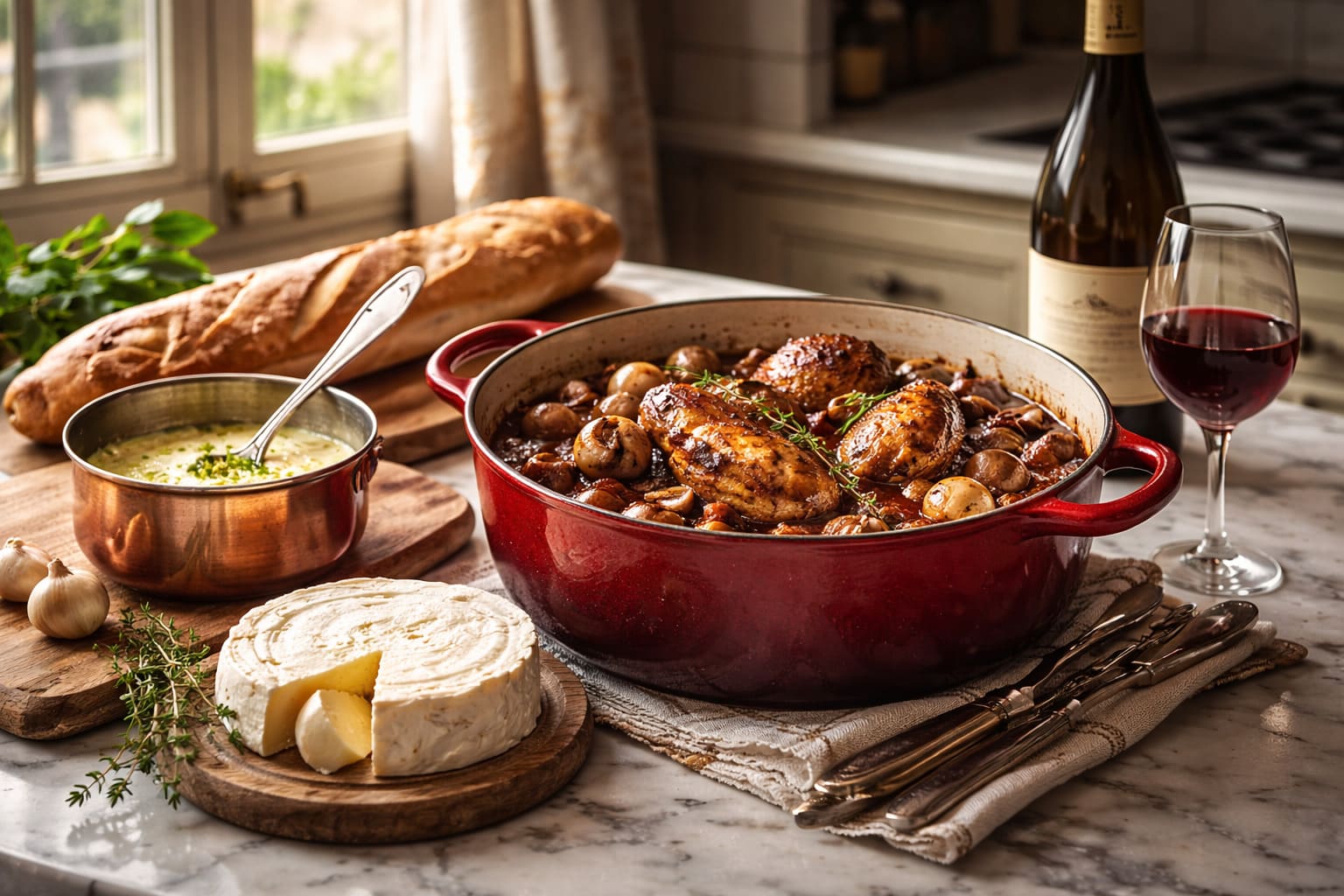
French cuisine is considered the best by many because, over about four centuries, French cooks wrote their methods down, taught them and put them into restaurants and hotels, while the story of Italian cooks rescuing French food is mostly a legend. The history of French cuisine is a history of codification more than of any natural superiority.
Where does the history of French cuisine begin?
No. The medieval court feasts that Britannica describes were showy affairs of richly spiced meat and fish, with spinach and saffron added to please the eye. The most famous cook of the 14th century was Guillaume Tirel, called Taillevent, who started as a kitchen boy in 1326 and became chief cook to Charles V in 1364. His career lasted 66 years. The recipe collection tied to his name, Le Viandier, is one of the earliest from medieval France.
At those banquets the courses came out all at once, a style the sources call service en confusion. Nobody would have called it a system. It was a display of money.
What did Catherine de' Medici really bring to France?
The popular answer is: the fork, the artichoke, the sorbet, the whole idea of refinement. Catherine married Henry, second son of King Francis, in Marseille on 28 October 1533, when she was 14. Britannica still says she arrived with her cooks and a taste for truffles, sweetbreads and artichokes, and for refined dishes such as aspics, quenelles and custards.
Food historians push back hard. Food historians Barbara Ketcham Wheaton and Stephen Mennell have discredited the legend. Their points are practical. King Francis and his nobles had dined at Italian tables during the wars in Italy, and an earlier generation did so during Charles VIII's invasion of 1494. A large Italian party had already come to France for her father's wedding to her French-born mother. Bankers, silk weavers and artists, Leonardo da Vinci among them, had settled in France before she did. And Catherine had little influence at court while Henry II was alive, because he was devoted to his mistress, Diane de Poitiers.
The earliest known reference to her as a popularizer of Italian cooking is the 1754 Encyclopedie entry on "cuisine" by Diderot and d'Alembert. It was not praise. It blamed fussy sauces on "that crowd of corrupt Italians who served at the court of Catherine de' Medici." So the legend was born about two centuries after the wedding, and it began as an insult. Italian ideas did reach France; the evidence for them comes from the long traffic between the two countries (Italy's own side of that trade is in the story of how tomatoes came to Italy), not from one bride's luggage.
How did La Varenne turn cooking into a printed system?
The real turn came in 1651, with Le Cuisinier francois by Francois Pierre de La Varenne (1615-1678). Britannica calls it the first true French cookbook and says it began a new style, haute cuisine, by putting moderation and quality of ingredients ahead of extravagance and quantity. The book wrote down for the first time in print: bouquet garni, stocks, reductions, a roux in place of crumbled bread as the base of sauces, butter in place of lard, and an early bechamel and bisque.
It also changed taste. Heavy medieval spicing gave way to the natural flavor of foods, most exotic spices were replaced by local herbs (pepper stayed), cauliflower, asparagus and artichoke appeared on the page, and savory dishes were kept apart from sweet ones, with savory first. La Varenne had probably worked for Nicolas Chalon du Blé, Marquis of Uxelles, for about ten years; the sauce duxelles carries the Marquis's name.
The book sold. It went through about thirty editions in 75 years, and the English version, The French Cook (London, 1653), is reported to have sold over 250,000 copies and stayed in print until 1815. Early French copies are scarce because kitchens wore them out. In 1691 Francois Massialot's Le Cuisinier roial et bourgeois organized recipes alphabetically, and the habit of reference-book cooking was set.
Did the French Revolution create the restaurant?
Partly. The Revolution abolished the Paris guilds that had controlled who could produce and sell food, so anyone could. Britannica says that after 1789 chefs began opening restaurants and a wider range of food became available at prices even working people could afford.
The usual tale, that restaurants appeared overnight when out-of-work aristocratic cooks needed jobs, is neater than the record. Accounts differ on the 1765 broth shop of Boulanger (the owner is also named Mathurin Roze de Chantoiseau): some histories treat it as a legend. Accounts also differ on Antoine Beauvilliers's La Grande Taverne de Londres, with its linen, trained waiters and long wine list: some histories date it to 1786, and Larousse Gastronomique gives 1782. A Paris decree of June 1786 already recognized restaurants and let them serve until 11 p.m. in winter and midnight in summer. The unemployed cooks of the Revolution fed a trade that existed. They did not invent it. No source read for this article gives a reliable count of Paris restaurants before and after, so the oft-repeated jump "from a handful to hundreds" stays out of it.
Carême and Escoffier: who wrote the rules?
Marie-Antoine Carême, born in 1784, trained in a pastry shop, was noticed by Talleyrand and cooked for Napoleon. Britannica adds the prince regent (later George IV) and Tsar Alexander of Russia to his employers. He treated cooking as both an art and a science, wrote cookbooks that made haute cuisine easier for other cooks to follow, and is credited with four mother sauces: bechamel, veloute, espagnole and allemande. Among his books are Le Maitre d'hotel francais (1822) and L'Art de la cuisine francaise au dix-neuvieme siecle (1833-5).
Auguste Escoffier then trimmed the system down. Britannica says he streamlined Carême's work, cut the elaborate garnishes, favored seasonal ingredients, and reduced the mother sauces to five: bechamel, veloute, espagnole, hollandaise and tomato, with allemande demoted to a secondary sauce. He ran the Carlton kitchens in London from 1898 to 1921, set up the brigade system of five stations, and published Le Guide Culinaire in 1903. A kitchen run by brigade could be copied in any hotel that hired a cook trained in it, and that is how a regional court style became a professional language.
Why does the reputation outlast the evidence?
Two things kept it going. One is the cooking itself, which is good by any measure and built on techniques now used everywhere: mirepoix, deglazing, en papillote, flambe. The other is institutions. In 1960s and 1970s France, chefs lightened their dishes and the style took the name nouvelle cuisine; the term was already used by Menon in the 1740s and was revived by Henri Gault and Christian Millau for chefs such as Paul Bocuse and the Troisgros brothers. In November 2010 UNESCO added "the gastronomic meal of the French" to its list of intangible cultural heritage. The listing describes a festive meal for births, weddings and anniversaries, opening with an aperitif, ending with liqueurs, and holding at least four courses between them, usually with wine (the history of champagne is one chapter of that tale) and cheese (see also the history of cheese).
Notice what the UNESCO text honors: a social ritual, not a ranking. Whether French food is the best is a taste question the sources do not answer. What they do show is that France was unusually good at writing its cooking down, selling it abroad and getting the world to take it seriously.
Questions people ask
Did Catherine de' Medici introduce the fork to France?
Britannica says Catherine de' Medici brought Italian cooks to France after marrying the future Henry II in 1533. Historians Barbara Ketcham Wheaton and Stephen Mennell, reject the popular claim that she introduced forks and a long list of Italian foods. Italian influence was already arriving through wars, weddings and immigrants. The legend dates to a 1754 Encyclopedie entry.
Who is the father of French cuisine?
Titles vary by source. Britannica calls Marie-Antoine Careme the founder of French gastronomy and says Auguste Escoffier is known as the king of chefs. It also names Francois Pierre de La Varenne's 1651 book Le Cuisinier francois as the first true French cookbook. Careme codified the mother sauces, while Escoffier streamlined them and organized the professional kitchen.
What are the French mother sauces?
Britannica says Marie-Antoine Careme created four mother sauces: bechamel, veloute, espagnole and allemande. Auguste Escoffier later recategorized them into five: bechamel, veloute, espagnole, hollandaise and tomato. In his version allemande became a secondary sauce. These sauces served as bases from which cooks in French kitchens built many other sauces.
When did French gastronomy get UNESCO recognition?
UNESCO inscribed the gastronomic meal of the French on its Representative List of the Intangible Cultural Heritage of Humanity in 2010. The listing describes a festive social meal for births, weddings, birthdays and anniversaries, with an aperitif, at least four courses, wine pairing and a carefully set table, passed on by knowledgeable gastronomes.
Filed under Cultural Identity
Want more stories like this?
One food history story, every week. No spam, just the stories behind what the world eats.