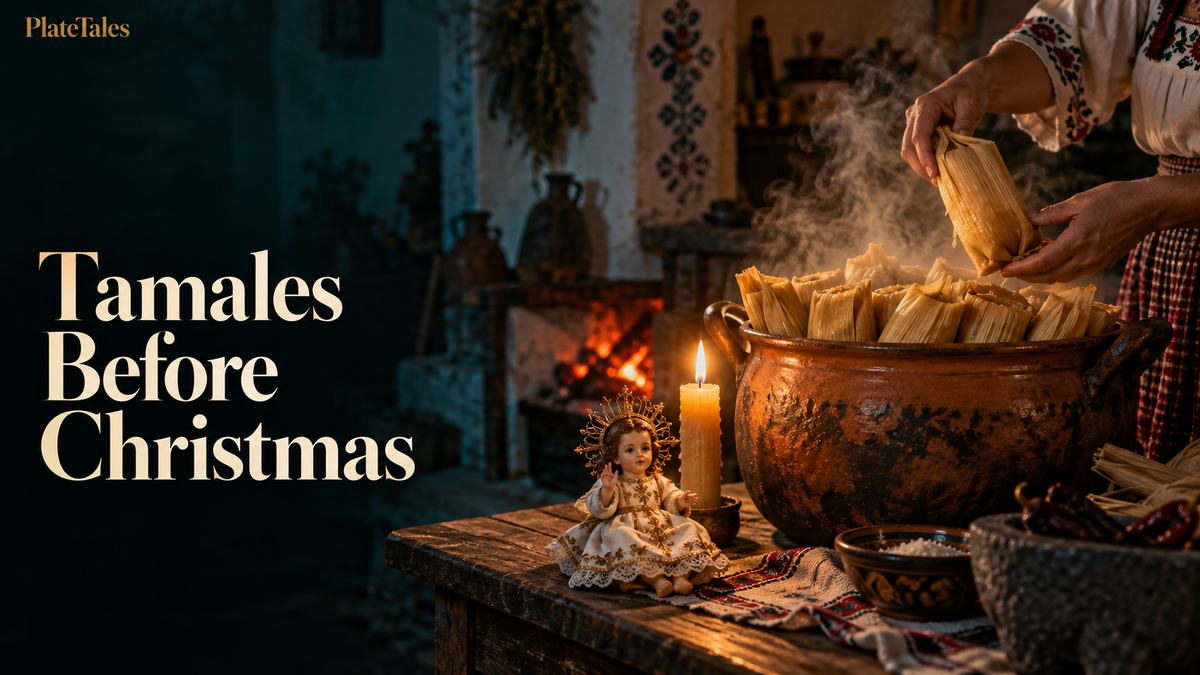
Mexicans eat tamales at Christmas because the Catholic holiday season, which in Mexico runs from the Virgin of Guadalupe on 12 December to Candlemas on 2 February, was laid over the same winter weeks in which the Mexica (the Aztecs of Tenochtitlan) already steamed tamales for their gods and passed them around the neighborhood. The friar who wrote those feasts down in the 1570s pointed out the overlap himself.
His name was Bernardino de Sahagún, a Franciscan at Tlatelolco who spent decades collecting the testimony of Nahua elders with former students such as Antonio Valeriano and Martín Jacobita. The result, the Historia general de las cosas de Nueva España and its illustrated twin, the Florentine Codex, is the closest thing we have to an eyewitness record of Aztec festival food. Tamales turn up in the Codex 217 times, by one count.
The friar who matched Candlemas to the Mexica new year
Book 2 of the Historia general opens with the calendar of fixed feasts. The first month, Atlacahualco, "comenzaba en el segundo día del mes de febrero, cuando nosotros celebramos la purificación de nuestra Sra." The Purification of the Virgin is Candlemas, forty days after Christmas.
So by Sahagún's reckoning, the Mexica year opened on the day that families across Mexico now reserve for tamales and atole. The match is his own arithmetic: eighteen months of twenty days, plus five leftover days, lined up against the Julian calendar Spain still used. Read it as one friar's best fit, not a fixed fact.
What it does show is that the clergy who brought Christmas to central Mexico knew which indigenous feasts their holidays were landing on.
In the same entry Sahagún records the darker side of Atlacahualco. "En este mes mataban muchos niños," he wrote: children dressed in finery, carried in litters to mountaintops and killed for the rain gods. That sentence matters later, for one of the most repeated claims about tamales.
Tamales in the Aztec winter: where the Christmas tradition starts
Walk Sahagún's calendar backward from February and the winter is full of tamales.
Atemoztli, "descendimiento del agua," fell in December. A footnote in the 1829 Mexico City edition, following the Jesuit historian Clavijero, puts its feast on 23 December. People who had made a vow shaped the mountains where rain clouds gather out of amaranth dough: the volcano, the Sierra Nevada, the Sierra de Tlaxcala.
Then they fed them. The tamales set before these dough mountains "eran muy chiquititos, conforme a las imágenes," doll-sized tamales for doll-sized gods. They came four times in one night, with little dishes of gruel and tiny gourds of cacao.
Then came Izcalli, the last month, which Sahagún says "comenzaba siempre á ocho de enero." This is the passage that sounds most like a modern December: "comian tamales por todos los pueblos, en todas las casas, y toda la gente convidábanse unos á otros con ellos." In every town and every house, people invited one another over for tamales.
Each household first offered five tamales of ground amaranth leaves to the hearth fire and set one on each family grave. Then they ate the lot and left nothing for the next day. The feast carried the dish in its name: Oauhquiltamalqualiztli, the eating of amaranth-leaf tamales.
So when Spanish friars began staging their own winter devotions, they were filling weeks that already belonged to this food. The best-known case is the posadas, nine nights of processions from 16 to 24 December. The usual account, repeated widely but resting on church tradition rather than a published document, credits the Augustinian friars of Acolman, near Mexico City, with the first misas de aguinaldo in the 1580s. The services later moved out of churches into haciendas and homes. Today the posada ends with a meal, and tamales and atole are usually on the table.
How old are tamales? The history before the Aztecs
Older than the Aztecs, though not as old as the internet says. Alonso de Molina's Nahuatl dictionary of 1571 glosses tamalli as "pan de mayz embuelto en hojas y cozido en olla," maize bread wrapped in leaves and cooked in a pot.
The Florentine Codex lists tamales for the lords, including "white tamales with beans forming a sea shell on top." It also describes market women selling tamales filled with frog, axolotl and chiles. In the month of Quecholli, Sahagún records two tamales laid on each grave beside small arrows and torches, left a full day and burned at night.
Further back are the Maya. Karl Taube argued in 1989 that the Classic Maya glyph waaj meant tamale. In 2005 William Saturno, Taube and David Stuart published the North Wall mural at San Bartolo in Petén, Guatemala, where round white tamales sit stacked in a vessel. Published estimates for the painting range from about 100 BC to about AD 100, so call it two thousand years old.
At Salinas la Blanca on Guatemala's Pacific coast, a site occupied between 1200 and 400 BC, ceramic vessels reportedly held traces of steamed dough made from lime-treated corn.
The figure you will see everywhere, 8000 to 5000 BC, traces back to Daniel Hoyer's 2008 cookbook Tamales, not to an excavation. An Infobae overview admits a "relative absence of physical evidence" for tamales before the conquest, made up partly by pictures and words. About three thousand years, on the best current evidence, is plenty.
The corn dough here is the same nixtamal masa behind the history of the taco. Wrapping dough around a filling and cooking it in steam turns up far from Mexico too, as the story of dumplings across the world shows.
Did tamales replace human sacrifice?
This is the claim repeated most confidently, and Sahagún's text runs the other way. His Atlacahualco entry records children killed for the rain gods. An overview in El Universal says the Mexica offered plain "tamales de agua" to Tlaloc in that same month, while children were sacrificed.
The Izcalli chapter moves straight from tamales eaten in every house to the coming feast "en la que habían de matar los esclavos," at which slaves bought for the purpose were killed for the fire god. The food and the killing shared a calendar. One did not stand in for the other.
There is a serious scholarly idea underneath the legend. The anthropologist Brian Stross, as summarized in a 2025 paper posted by Brown University's archaeology department, describes the Tlaloc feasts as combining infant sacrifice with symbolic sacrifice, and at Atlcahualo the symbolic part was eating tamales. A symbol eaten beside real victims is not a replacement for them. No colonial source found for this story says the friars swapped tamales for victims.
The same Brown paper makes a sharper point. News articles and blog posts lean on the Atlcahualo link to give a Catholic feast an Aztec pedigree. In the author's words, "there is no connection between Atlcahualo and Candlemas, bar the consumption of tamales and the time of year."
Why are tamales eaten on Día de la Candelaria?
Because of a plastic baby. On 6 January families cut the rosca de reyes, and whoever finds the small figure of the Christ child baked inside owes everyone tamales on 2 February, the tamaliza. On Candlemas itself, families who rocked a Niño Dios figure at Christmas dress it and take it to church to be blessed.
How far back the custom goes is less clear than the blogs suggest. The UNAM historian Gisela von Wobeser, in a university feature, says plainly that the start of eating tamales on this day "es incierto," and that the pre-Hispanic link is something "algunos creen." Her colleague Roberto Álvarez Manzo calls the feast's origin "eminentemente católico."
A second UNAM piece quotes Johanna Broda on the Mexica side: Atlcahualo fell in the dry season, when ears of seed corn were offered to begin the long petitions for rain. Both things hold. The date has a documented colonial match with Atlacahualco, but no one has traced the line from an Aztec rain offering to a Mexico City tamaliza document by document.
Von Wobeser's own verdict was simpler: "Es una maravilla que haya un día del año en el que todos los mexicanos los comamos." For more feasts where a date chose the dish, browse our ritual foods stories.
What is a tamalada?
A tamalada is any gathering where tamales are the main dish. Among Tejano and Chicano families in the American Southwest it usually means the making itself: a December assembly line of soaking husks, spreading masa and folding, often run by a grandmother or mother.
Tamales take hours, they are made by the hundred, and they keep. That made them the obvious food for any feast that had to feed a whole neighborhood, from Izcalli to Nochebuena.
The recipe changed after 1521 even as the season held. The Spanish brought pigs, and pork and lard went into the dough and the filling. Sahagún's account of Atamalqualiztli, a feast held once every eight years, shows that salt and lime were already normal before then. Its whole point was a week of plain "tamales hechos sin sal," made with water alone and corn that had not been cooked with lime.
Whoever found the baby in the rosca still owes the tamales on 2 February, the day Sahagún said the Mexica year began.
Questions people ask
Who has to make tamales on 2 February?
Whoever finds the small Christ child figure baked into the rosca de reyes cut on 6 January owes everyone tamales on 2 February, Candlemas. The gathering is called the tamaliza. On the same day, Mexican families who rocked a Niño Dios figure at Christmas dress it and take it to church to be blessed.
Did the Aztecs eat tamales in winter?
Yes. Bernardino de Sahagún wrote that in Izcalli, which began on 8 January, people in every town and house ate tamales and invited one another over for them. In December, during Atemoztli, devotees also set doll-sized tamales before mountains shaped from amaranth dough to honor the rain gods.
How old are tamales in Mexico?
On the best current evidence, tamales are about three thousand years old. A mural at San Bartolo in Guatemala shows stacked tamales and is dated to roughly 100 BC to AD 100. The popular figure of 8000 to 5000 BC comes from a 2008 cookbook, not from an excavation.
What do Mexicans eat at the end of a posada?
Posadas are nine nights of processions from 16 to 24 December, and each one ends with a meal. Tamales and atole are usually on the table. The services began in churches, reportedly with Augustinian friars at Acolman in the 1580s, and later moved into haciendas and homes.
Filed under Ritual Foods, Cultural Identity
Want more stories like this?
One food history story, every week. No spam, just the stories behind what the world eats.