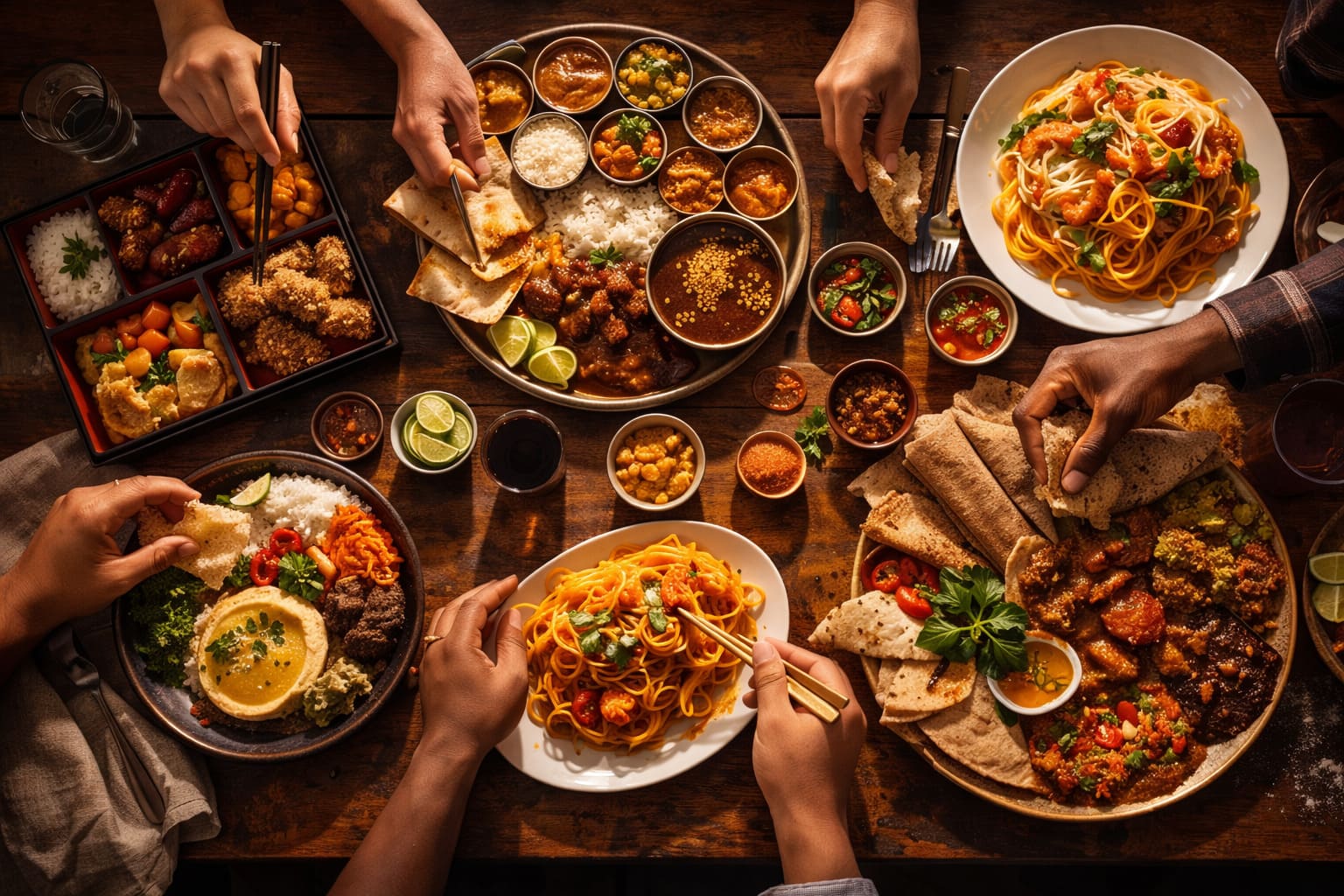
Food and cultural identity are tied together because a cuisine is something a group makes, teaches and defends, not something it is simply born with. The records show it being built: a self-published Italian cookbook in 1891, a Mexican and a Japanese application to UNESCO, a Thai government loan scheme for restaurants abroad, and a protest over a hamburger stand in Rome.
Why a cuisine feels older than it is
A dish can feel ancient to the people who eat it and still have a documented start date. That gap is where most of the interesting history sits. Groups of people have always eaten in particular ways, but the idea of a national cuisine, one list of dishes that stands for a whole country, is a later construction, and someone had to write it down.
The cases below are not a survey of the world. They are four moments where the work of turning food into identity left paper behind, so we can check what happened instead of repeating what sounds right.
Italy: a national cookbook before a national kitchen
Italy's cuisine is regional first. Each area has its own specialties, often down to the province, shaped by neighbors, by sea or mountains, and by money. Milan is known for risotto, Bologna for tortellini, Naples for pizza. The country itself was politically united only in the 19th century, so there was no single Italian table to describe.
Pellegrino Artusi tried anyway. His La scienza in cucina e l'arte di mangiar bene appeared in Florence in 1891, about two decades after unification. He could not find a publisher and paid for the printing himself. The first edition sold about a thousand copies in four years. By the time he died in 1911 more than 200,000 copies had sold.
The book held 790 recipes, and Artusi is credited as the first to put recipes from all the regions of Italy into one cookbook. The detail that matters is where the recipes came from: mainly Romagna and Tuscany, where he lived. A national canon, in other words, was assembled from a few regional kitchens and sold as the whole.
That helps explain why a story like the origin of pizza is so hard to tell as one Italian story. The dish belongs to Naples first, and became Italian later.
Mexico: a cuisine presented as a community practice
In 2010 UNESCO added "Traditional Mexican cuisine - ancestral, ongoing community culture, the Michoacan paradigm" to its Representative List of the Intangible Cultural Heritage of Humanity. The wording of the listing is worth reading closely, because it does not describe a menu. It describes a system.
The listing says the basis of that system is founded on corn, beans and chili, and ties it to farming methods such as the milpa and the chinampa. It names the people who carry it: female cooks and other people who grow crops and prepare traditional food, mainly in Michoacan. It speaks of collective participation in the entire traditional food chain, from planting through eating. And it says the knowledge and techniques express community identity.
So the identity claim here sits with the cooks, the fields and the festivals, with tortillas and tamales that also appear in Day of the Dead offerings, rather than with a list of famous plates. For the street version of this story, see the history of tacos.
Japan: what UNESCO listed as washoku
On December 4, 2013, Japan's washoku was inscribed on the same list. The Agency for Cultural Affairs had recommended it in February 2012, and the item was registered as "Washoku, traditional dietary cultures of the Japanese, notably for the celebration of New Year."
The UNESCO description calls washoku a social practice covering the knowledge, skills and traditions behind producing, preparing and eating food. It links the practice to a spirit of respect for nature. Its clearest expression, the text says, comes at New Year, when families pound rice cakes and prepare symbolic dishes to welcome the deities of the coming year. The home is named as the main place where the skills are taught, with grassroots groups, schoolteachers and cooking instructors helping.
One point of care: the UNESCO page never actually uses the word identity. It describes a living practice and leaves the larger claim to the reader. The everyday shape of washoku is easier to state. A meal is built on rice and miso soup, in the one soup, three sides pattern known as ichiju-sansai, with weight placed on seasonal ingredients.
When governments cook up an identity: Thailand, Korea and Peru
Some food identities were planned on purpose. The label for it is gastrodiplomacy, a term popularized in the early 2000s, and Thailand is the standard example. Its government launched the Global Thai program in 2002 with a target of raising the number of Thai restaurants worldwide from about 5,500 to 8,000 by 2003. The Department of Export Promotion offered prefabricated "master restaurant" plans, and state banks offered loans for restaurants overseas. By 2011 the count passed 10,000.
South Korea followed in 2009 with a program called Korean Cuisine to the World, run by its agriculture ministry with a budget of $77 million. It aimed for 40,000 Korean restaurants by 2017 and was nicknamed kimchi diplomacy abroad. The longer story is in how Korean food went global.
Peru started a tourism campaign, Peru Mucho Gusto, in 2006, funding cookbooks, festivals and restaurants abroad, and began an official culinary diplomacy program in 2011 alongside a UNESCO application for its cuisine. That first application was rejected.
None of this makes the food fake. It does show that a cuisine's international face can be a deliberate product with a budget line.
Eating slowly as a form of protest
Sometimes identity is something you defend. Slow Food began as Arcigola, an Italian organization founded by Carlo Petrini in 1986 to resist the opening of a McDonald's near the Spanish Steps in Rome. In 1989 delegates from 15 countries signed the founding manifesto of the international movement in Paris.
Sources differ on dating the start, since some give 1989 for the movement and 1986 for its Italian forerunner. Either way, the movement grew into a project that catalogs local foods. Its Ark of Taste is kept for each ecoregion, to celebrate local culinary traditions and the foods at risk of disappearing.
The protest also shows a shift in what people thought was under threat. The worry was not hunger. It was that a place's way of eating could be flattened, and that people in Rome would stop recognizing their own table.
Food and cultural identity when people move
Identity built at home travels badly in one respect and well in another. Recipes rarely survive migration unchanged, because the ingredients differ, but the habit of cooking them often does, and new places add their own. How that plays out in practice is the subject of how immigration changed American food.
The Italian case shows the timing. About two decades after unification, around 1880, the Italian diaspora began, and with it the spread of Italian cuisine abroad, roughly a decade before Artusi's book appeared.
Questions people ask
Why is food so closely linked to a group's sense of self?
Food is made and eaten together, so it is taught in homes and repeated at festivals. UNESCO's description of washoku, for example, names the home as the main place where its skills are taught, and ties its clearest expression to the shared New Year meal in Japan.
Can a national cuisine be invented?
Yes, in part. Pellegrino Artusi's 1891 Italian cookbook drew mainly on recipes from Romagna and Tuscany and is credited with the first national cuisine of Italy. Thailand's government also launched its Global Thai program in 2002 to spread Thai restaurants abroad.
What did UNESCO actually list for Mexico and Japan?
UNESCO listed Traditional Mexican cuisine, centered on the Michoacan paradigm, in 2010, and washoku, the traditional dietary cultures of the Japanese, on December 4, 2013. Both listings describe living community practices, including growing, cooking and sharing food, rather than a fixed menu of dishes.
How did the Slow Food movement start?
Slow Food grew out of Arcigola, an Italian group founded by Carlo Petrini in 1986 to resist a McDonald's opening near the Spanish Steps in Rome. Delegates from 15 countries signed the international movement's founding manifesto in Paris in 1989.
Filed under Cultural Identity
Want more stories like this?
One food history story, every week. No spam, just the stories behind what the world eats.