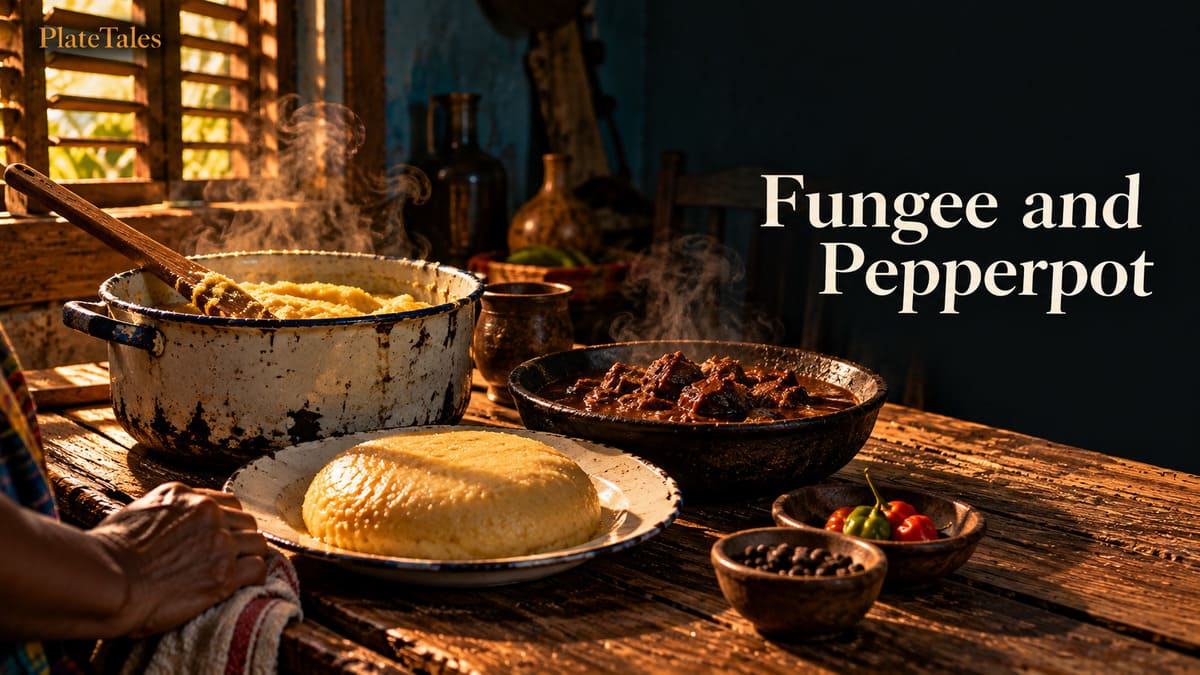
Fungee and Pepperpot: Antigua's National Dish Story
Fungee and pepperpot is the national dish of Antigua and Barbuda. Its African cousins are clear, its exact history is not, and here is what the sources support.
The histories, migrations, and moments behind the world's favorite dishes.

Fungee and pepperpot is the national dish of Antigua and Barbuda. Its African cousins are clear, its exact history is not, and here is what the sources support.

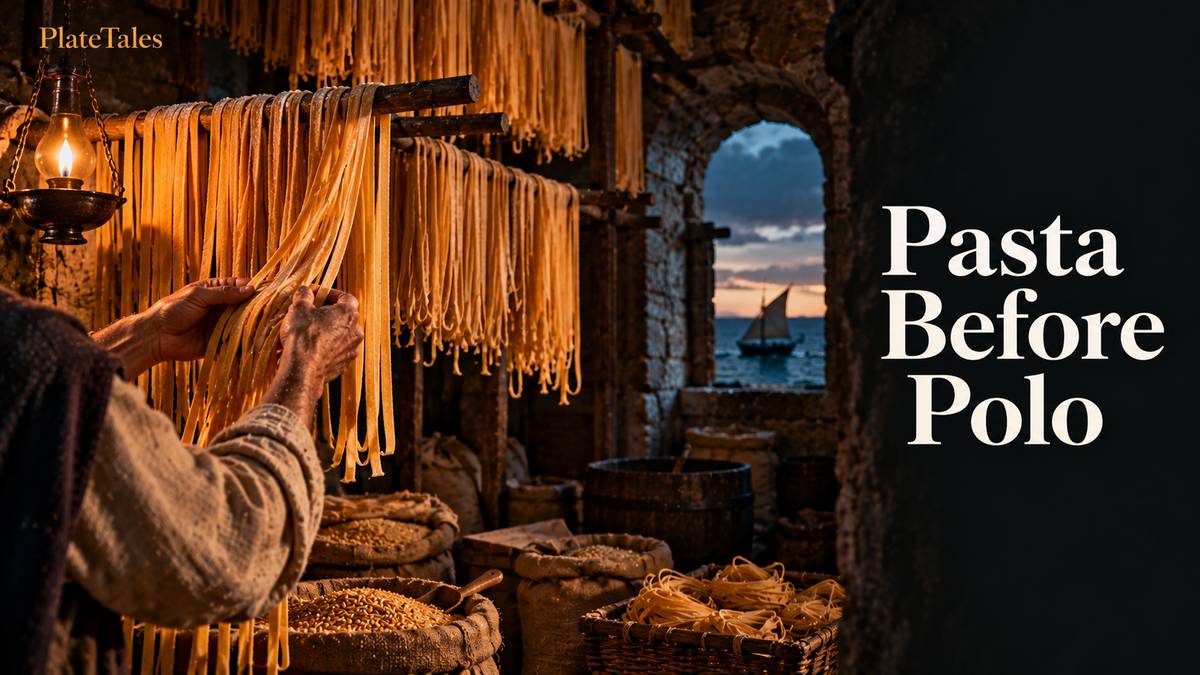
Marco Polo came home to Venice in 1295. Sicilian mills were exporting dried pasta by 1154, and the tale of his sailor named Spaghetti comes from a 1929 American trade journal.

Colada morada and guaguas de pan are Ecuador's food for November 2. Their story mixes Andean ancestor rites with a Spanish church calendar, and the usual dates do not hold up.

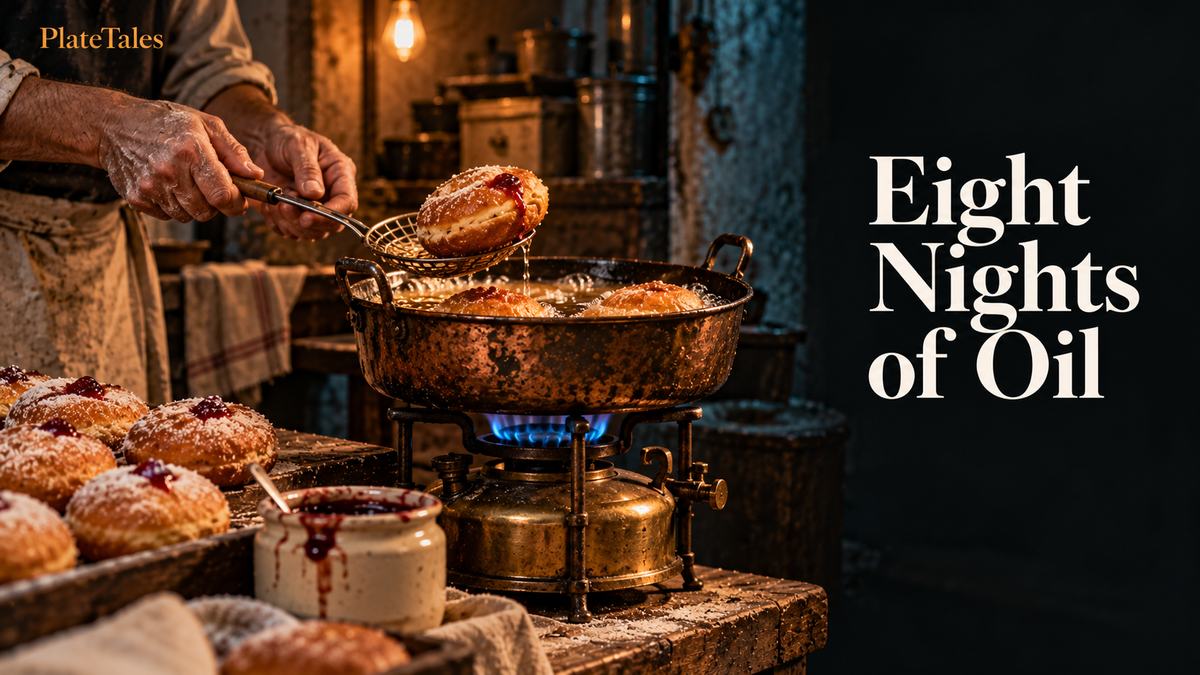
The oil explains the frying. The jam came from German Carnival baking, and a labor union in 1920s Palestine may explain why the bakery doughnut won.

Fiambre is a cold Guatemalan salad of pickles, sausages and cheese, made for 1 November. Its origin is unrecorded, so here is what the evidence supports.

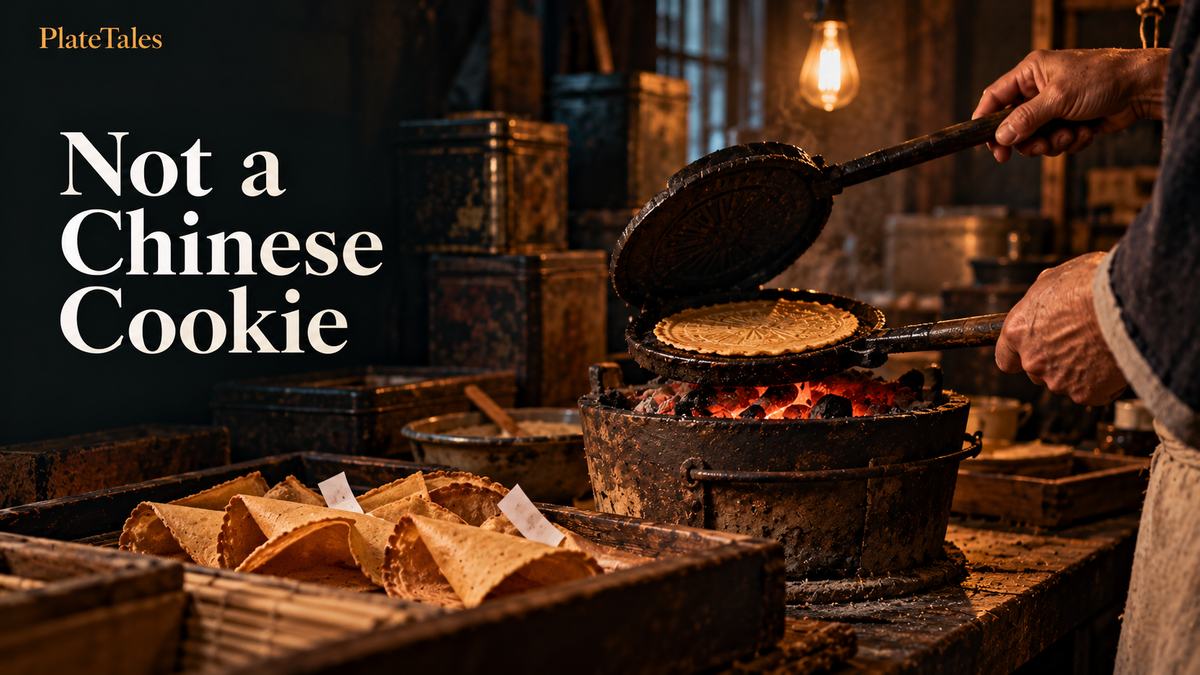
The fortune cookie began as a Japanese cracker with a paper slip in its fold. Japanese bakers made it American, and internment in 1942 handed it to Chinese restaurants.

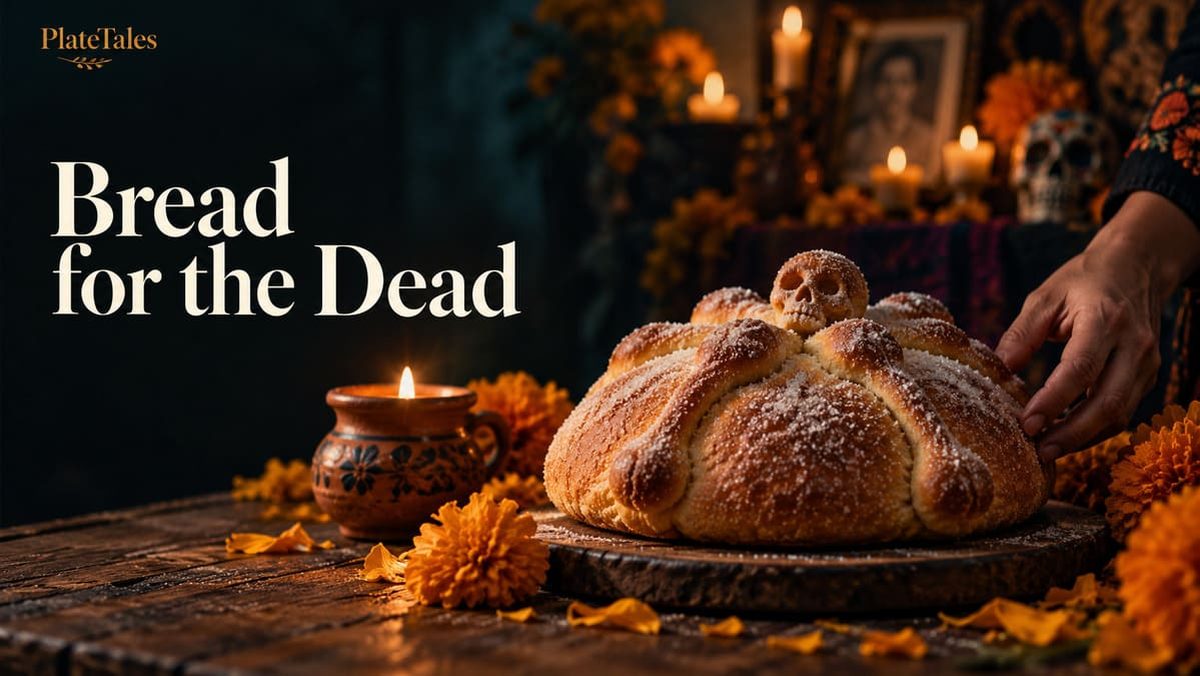
Pan de muerto looks like an ancient Aztec offering, but its wheat, sugar and eggs came from Spain. Here is what the sources say about the bones, the legend and the rival origins.

The Hanukkah pancake is at least 700 years old and the potato in it is under 200. Before that it was cheese, then buckwheat fried in goose fat.

Ketchup was a fish brine before it was a tomato sauce. How a Hokkien word reached a London slang dictionary by 1699, and why the Cantonese tomato theory fails.

Thomas Jefferson gets the credit and James Hemings gets the correction, but Richard II's master cooks wrote the dish down around 1390, centuries before either man was born.

A Glasgow restaurateur said he invented chicken tikka masala for a customer who found his tikka dry. The tin of tomato soup in the story was a joke told to journalists.

The first pecan pie in print dates to February 1886 and was a milk custard with boiled nuts. The syrup pie, the New Orleans legend and the Karo story all came later.
One food history story, delivered every week.